LENOVO
How might we evolve Lenovo’s digital e-commerce experience for a new generation - Gen Z?
In collaboration with Lenovo’s UX team, I led design efforts within a 5-person team to help execute user interviews and site audits, extract insights to identify intervention opportunities, and bring our concepts to life.
[1] Digital product strategy
[2] E-commerce redesign
Scope
- Research
- Strategy
- Web Design
Role
- PM
- Designer
A strategy that responds to how Gen-Z consumes [1]
Overview
In a world with more and more consumers who grew up in fast, mobile-first environments (yes, Gen-Z), Lenovo’s business-oriented website needed to evolve with the way a new generation consumes product information online.
Such ambition needed a strategy. With UX researchers, I explored how to approach this problem in ways that considered their huge product catalog, the complexity of cross-device shopping, and the natural behaviors of a younger audience.
Understanding what makes an impact
Drawing from industry data research and conversations with real students and consumers across generations, key findings started emerging for us to create our strategic framework around. We started to find out their behaviors which we could leverage in our solutions, target to fix, or guide our decision-making on positioning.

consumer interviews
site audits
literature reviews
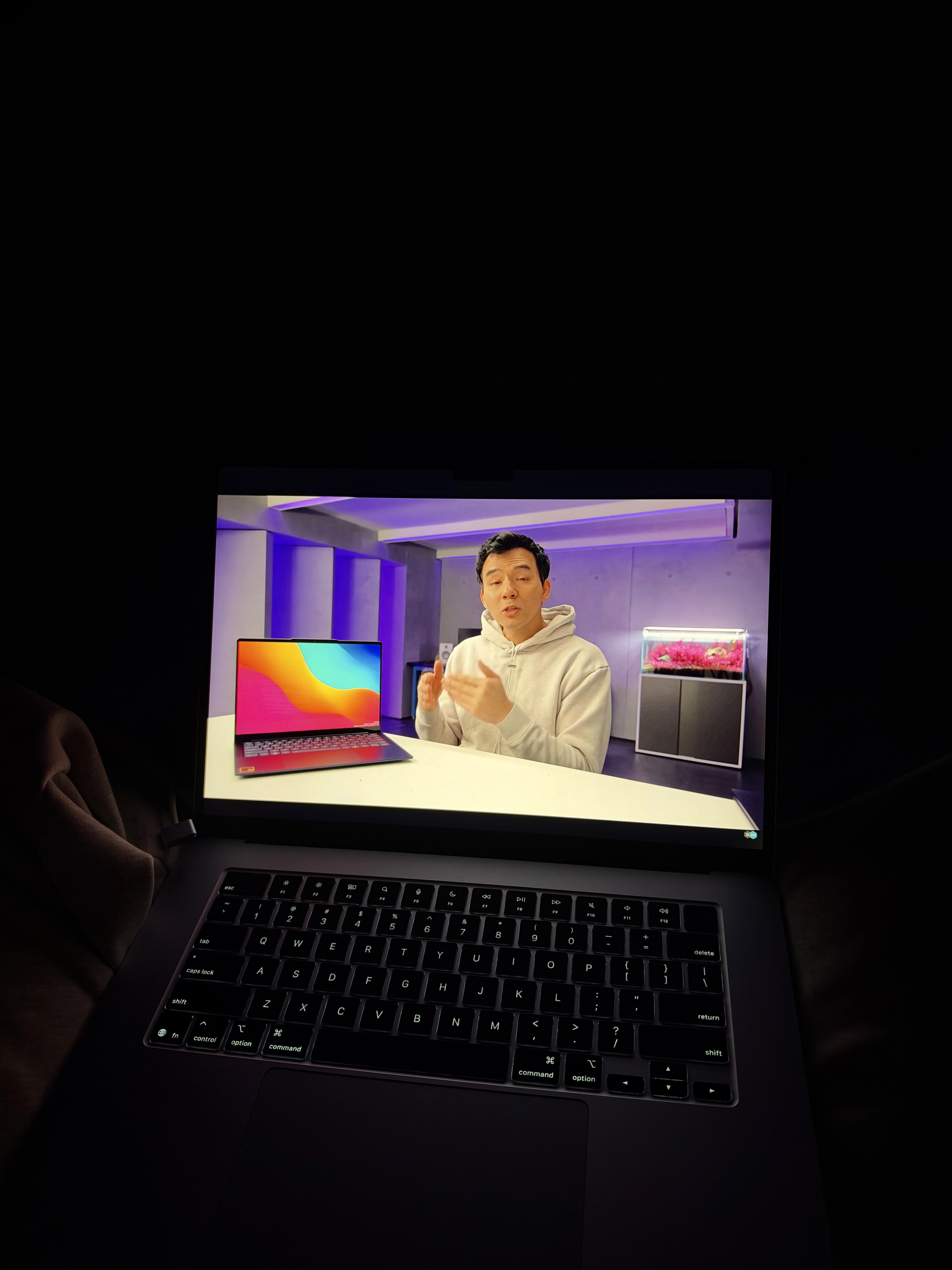
Social influence & UGC
User-generated content is among the highest performing forms of marketing. The authenticity, relatability, and trust that comes from both organic UGC and established creators is significant in influencing this generation’s discovery and first impressions.

The person they could be
With all the aspiring artists, engineers, architects, and more in the world, rather than simply understanding what a product does, consumers want to see how it fits into their personal lives and the results it can help them achieve.
Information is necessary, but overly technical pages hurt the simple, engaging experience that users are drawn to.
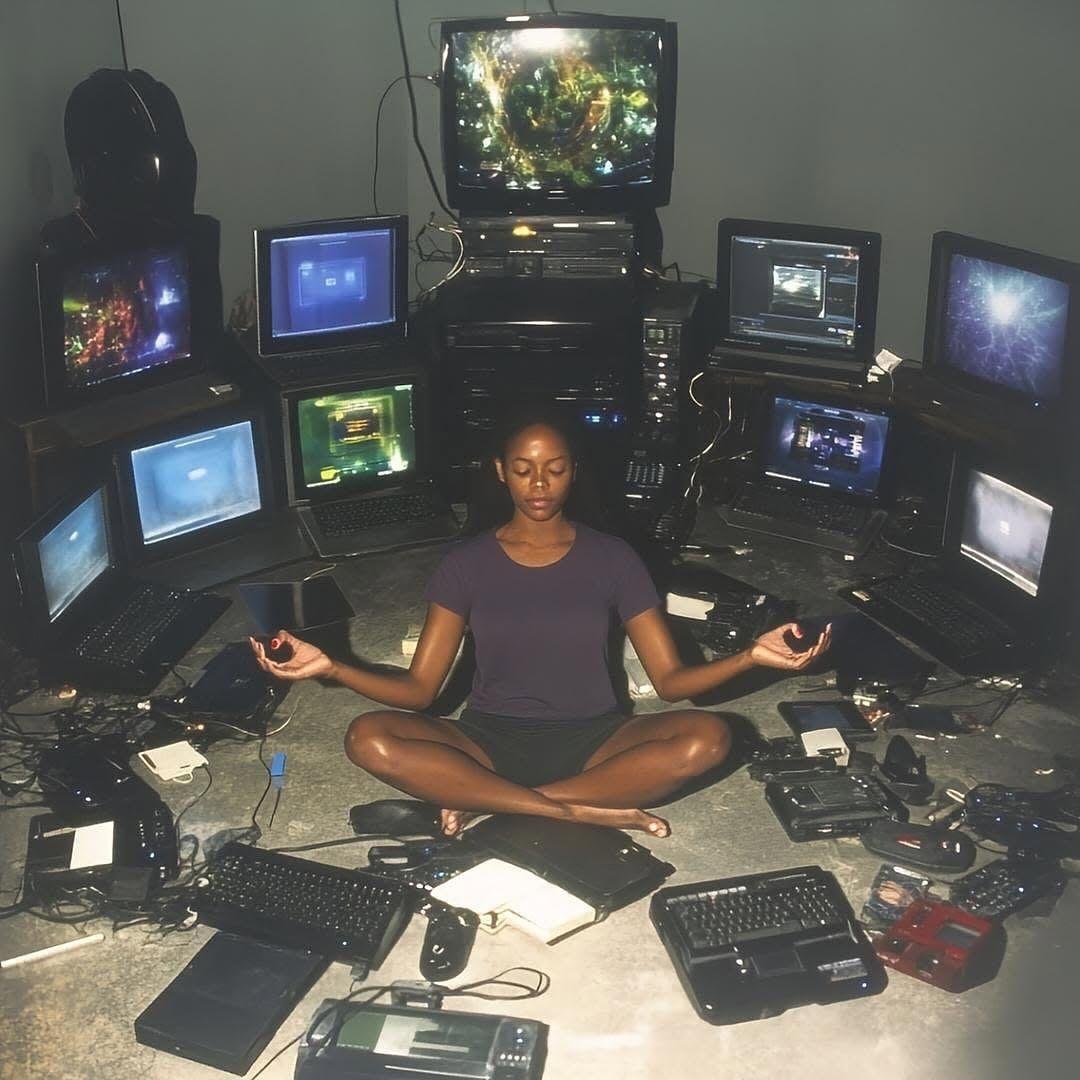
Never-ending comparison
In today’s world of countless online resources and products, decision fatigue is real. Shoppers move between tabs, devices, videos, and competing products to evaluate their options before committing.
Impulse purchases were also cited, especially when deals arise, but are less common with long-term investments like laptops.
Existing pages saw limited visual storytelling, dense blocks of text, and uninspiring information
Interventions for a refreshed experience [2]
Overview
The evolution of an experience begins with reconsidering the familiar.
From discovering the right laptop to understanding what makes it unique, we set the stage for a transformation of Lenovo's digital shopping experience suited for the new generation, balancing the art of storytelling with intentional and seamless organization.
Across four interconnected touchpoints, adaptive layout systems bring this to life across desktop and mobile.

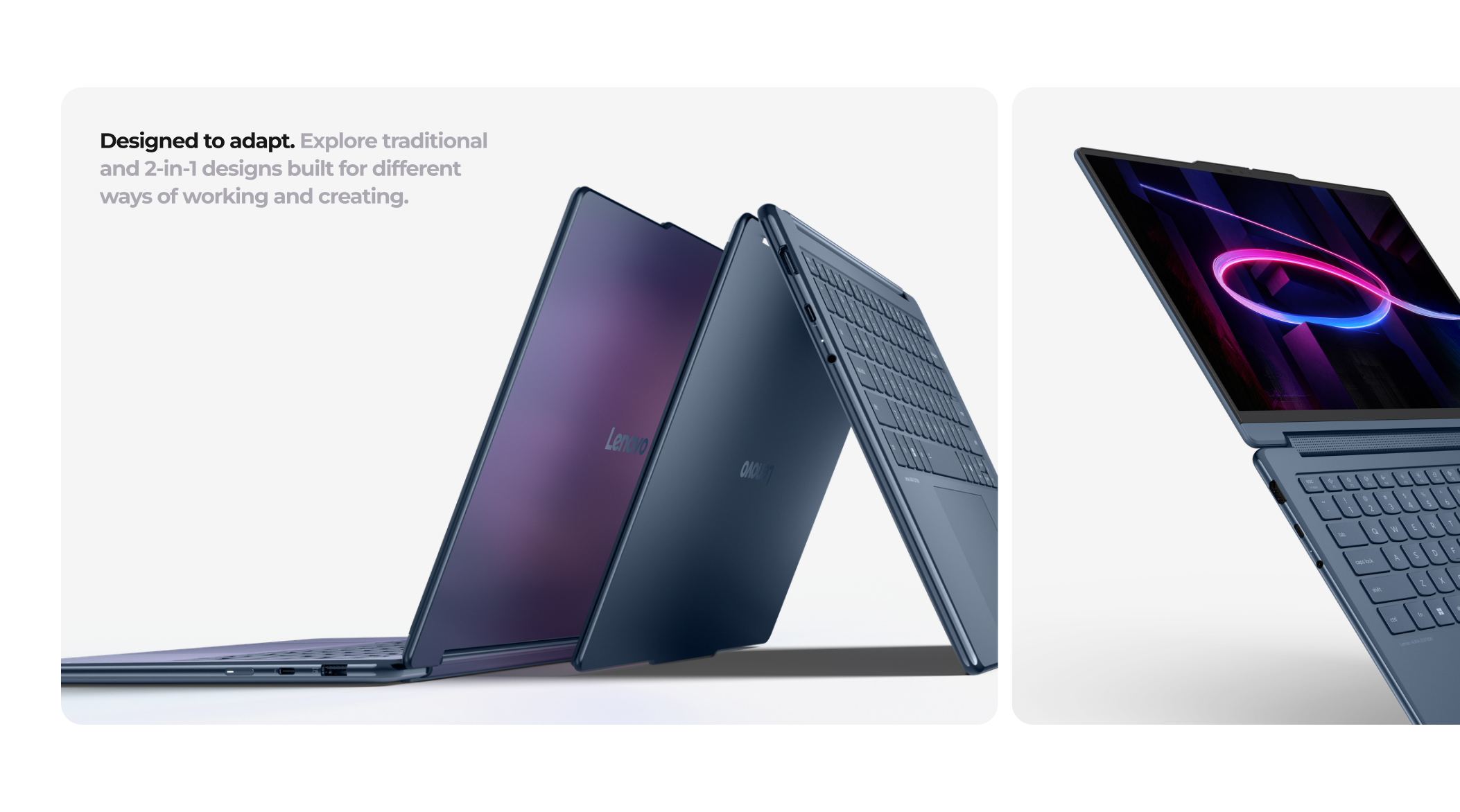
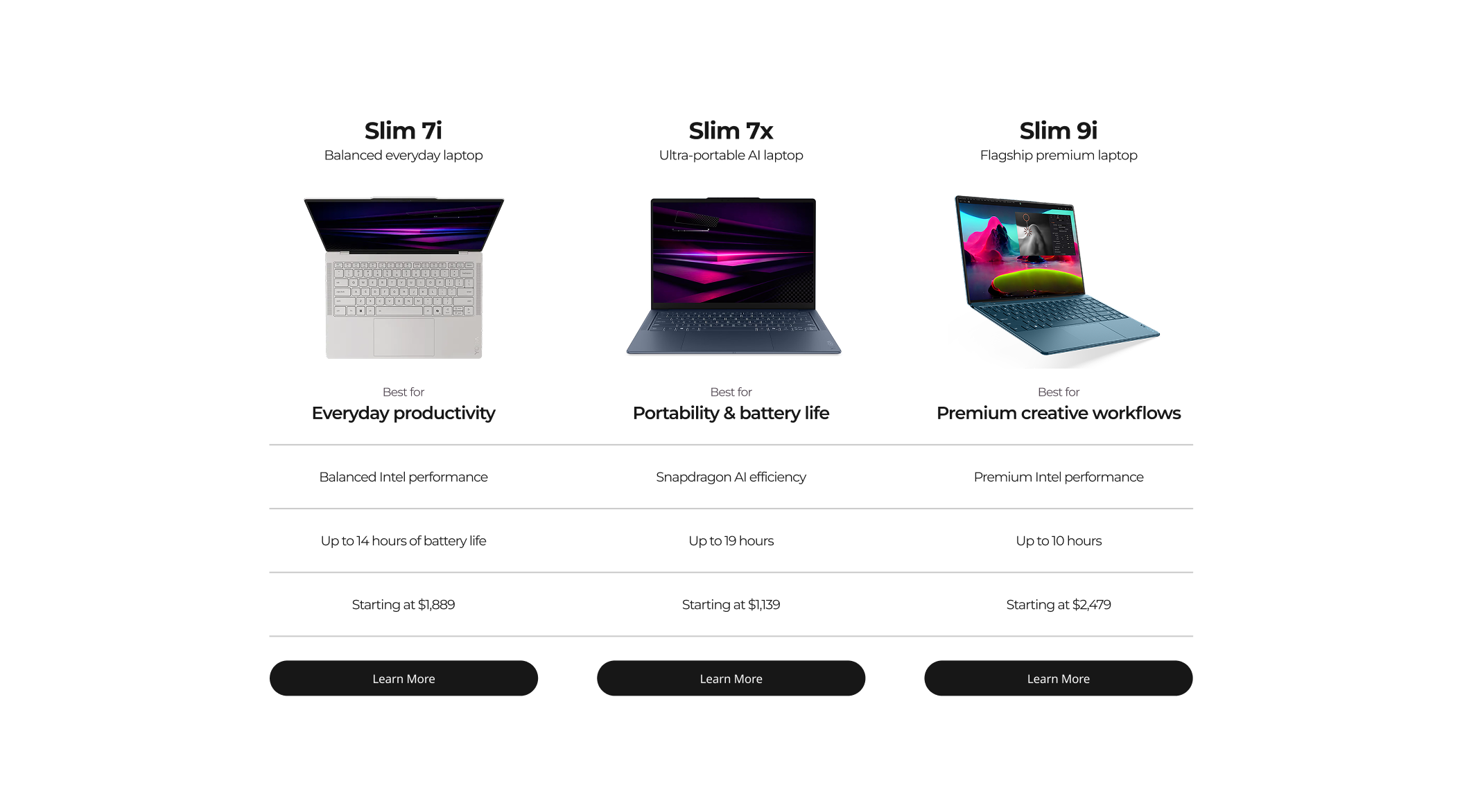
Making sense of product families with an adaptable framework.
Product line Page
Every product line has its own audience, identity, and built purpose.
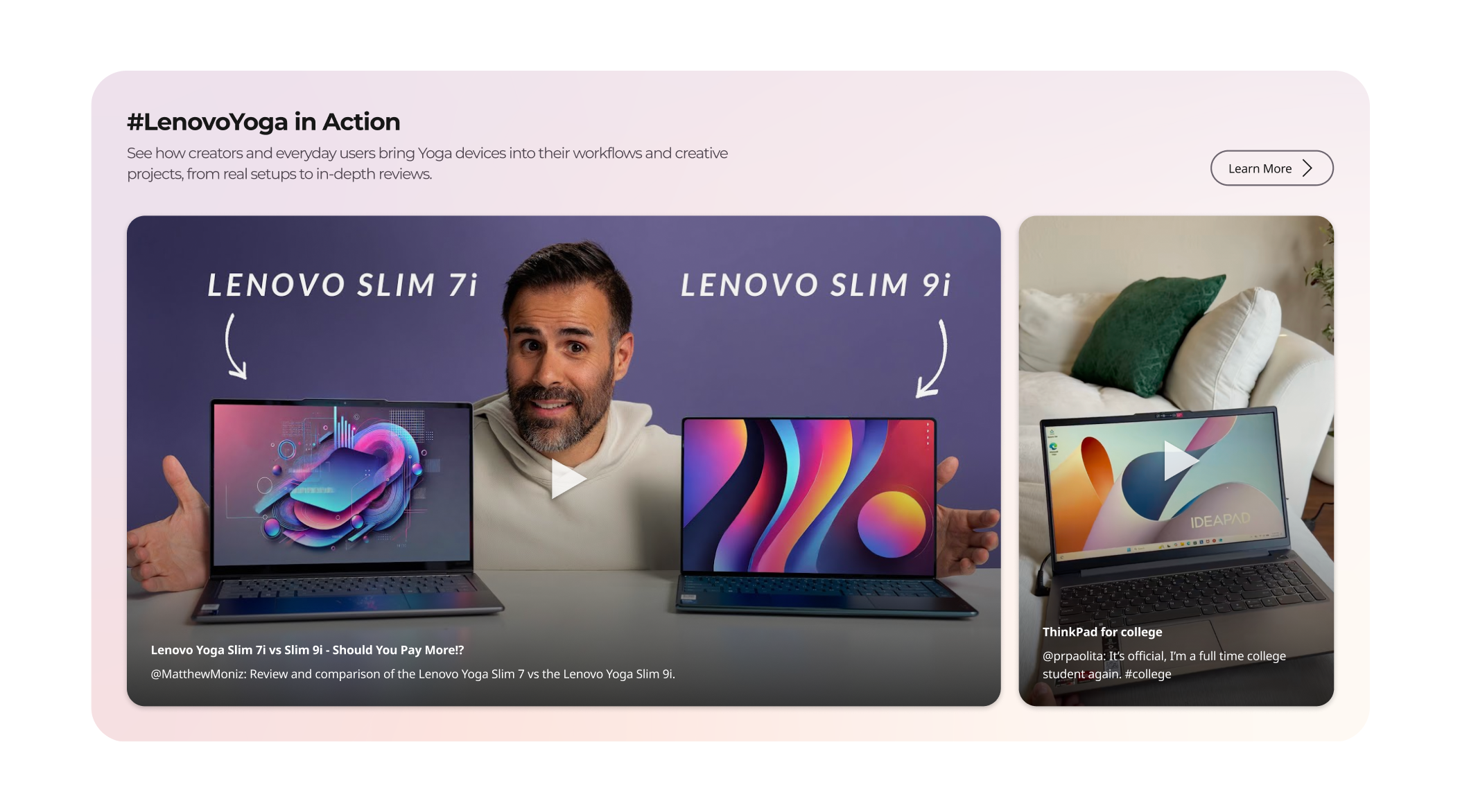
The PLP was rethought as a clearer starting point for exploration within each lineup, starting with a compelling, visual-first experience. At the center, approachable comparisons make distinctions clearer and personal, and real-world community content give a human touch.
Beginning with YOGA, we developed a flexible framework that could extend across Lenovo's segments - one that connects products to the people and possibilities behind them.
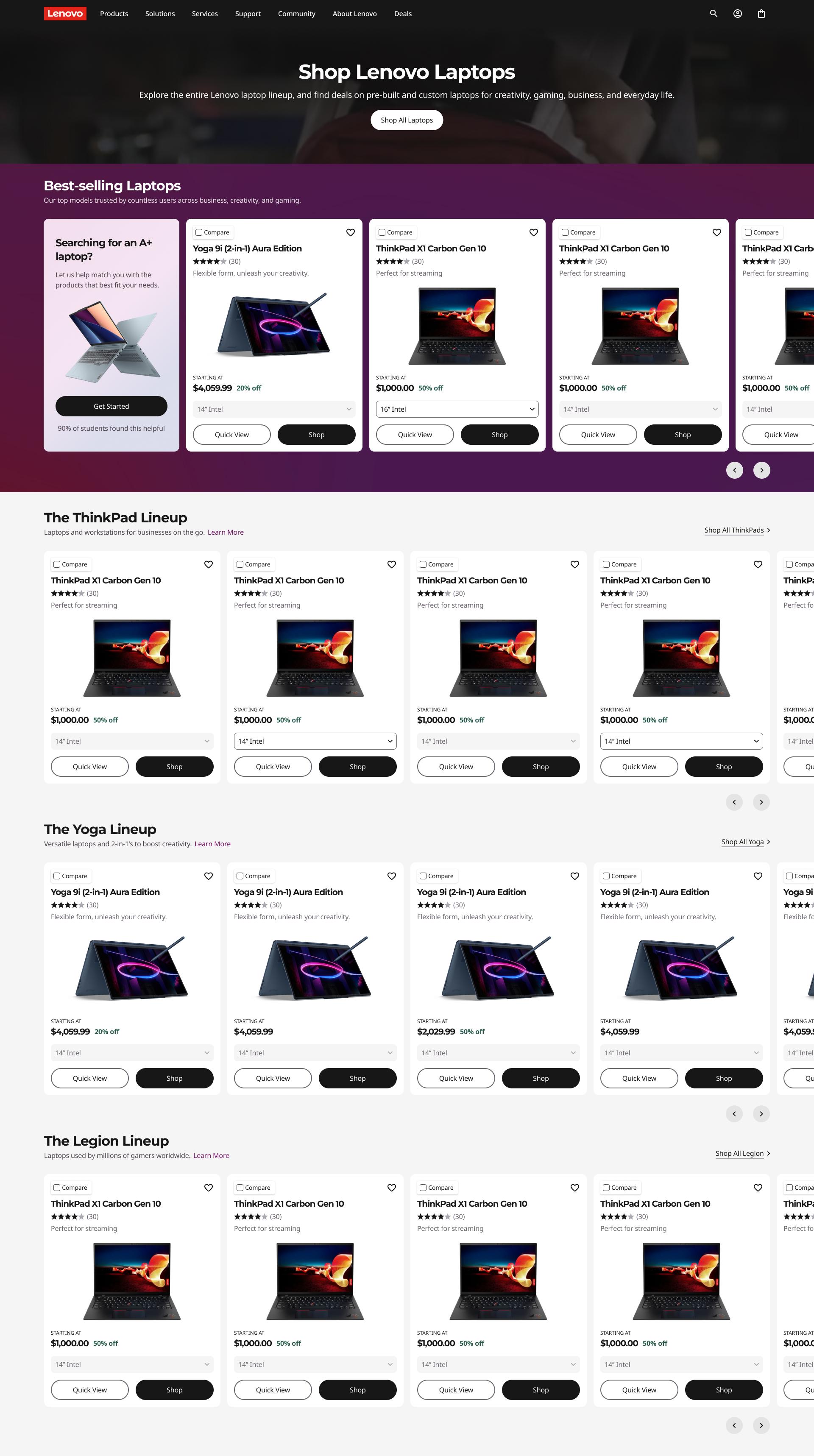
Bringing order to a complex catalog.
Catalog
While some users begin by exploring a specific lineup, others enter at Lenovo's broader product catalog. The goal was to make an overwhelming selection of products feel more like browsing through a thoughtfully organized collection.
A simplified card system reduces repetitive clutter and brings similar configurations together, and introducing quick view modals just a click away. Organized around recognizable product families, the catalog gives shoppers a path find their way forward.
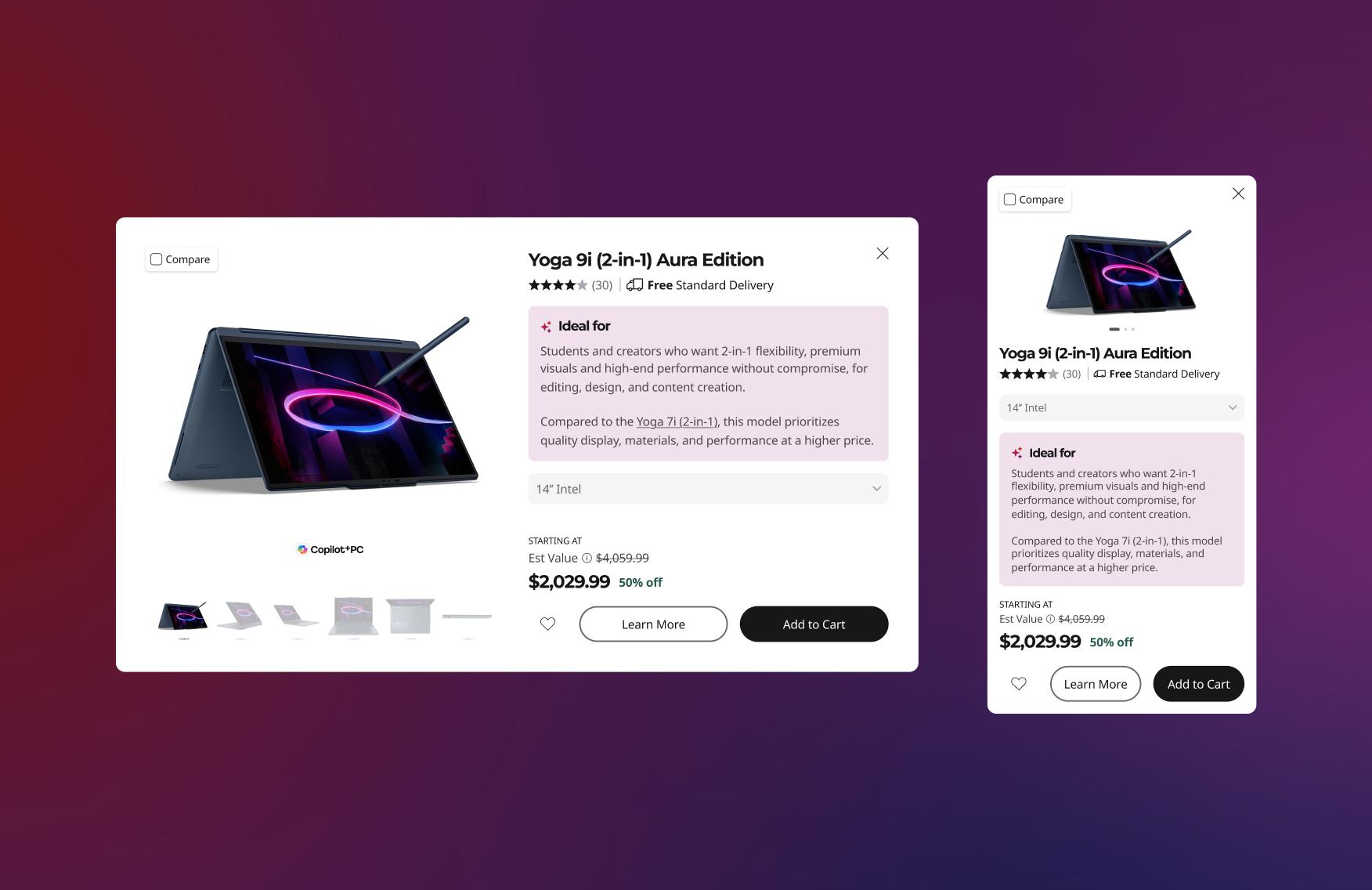

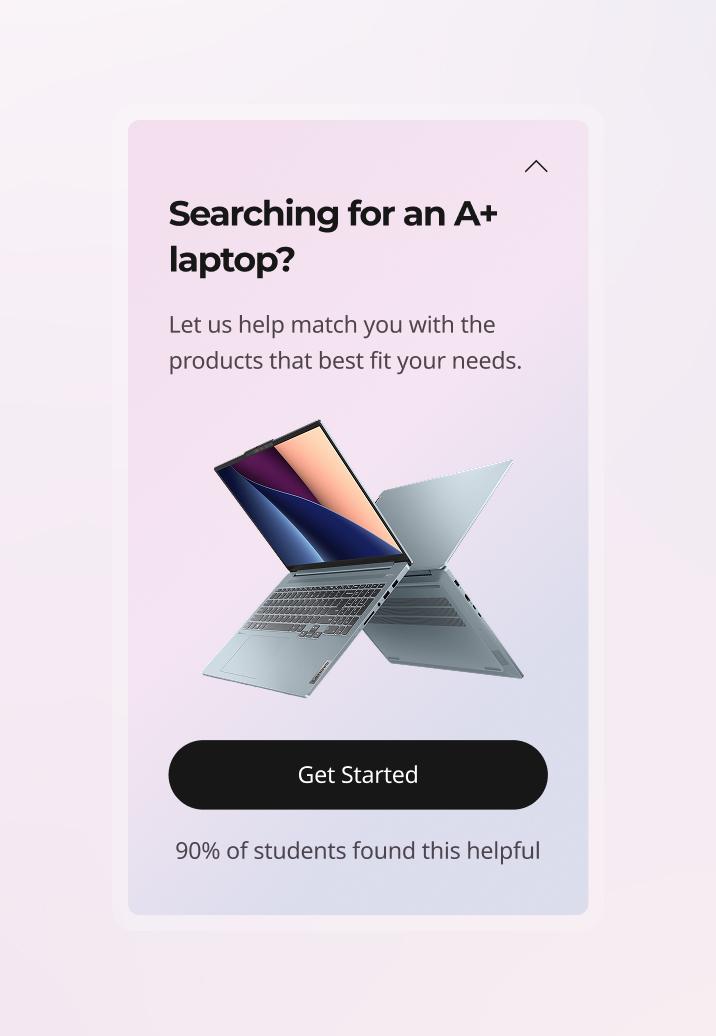
A little guidance goes a long way.
Guided Recommendations
An interactive tour asks the right questions and filters products in real-time into a selection based on individual needs. Personalized AI summaries explain how each recommendation fits, helping users make sense of their options without getting caught up in the specs.
Getting to know the product, and making it yours.
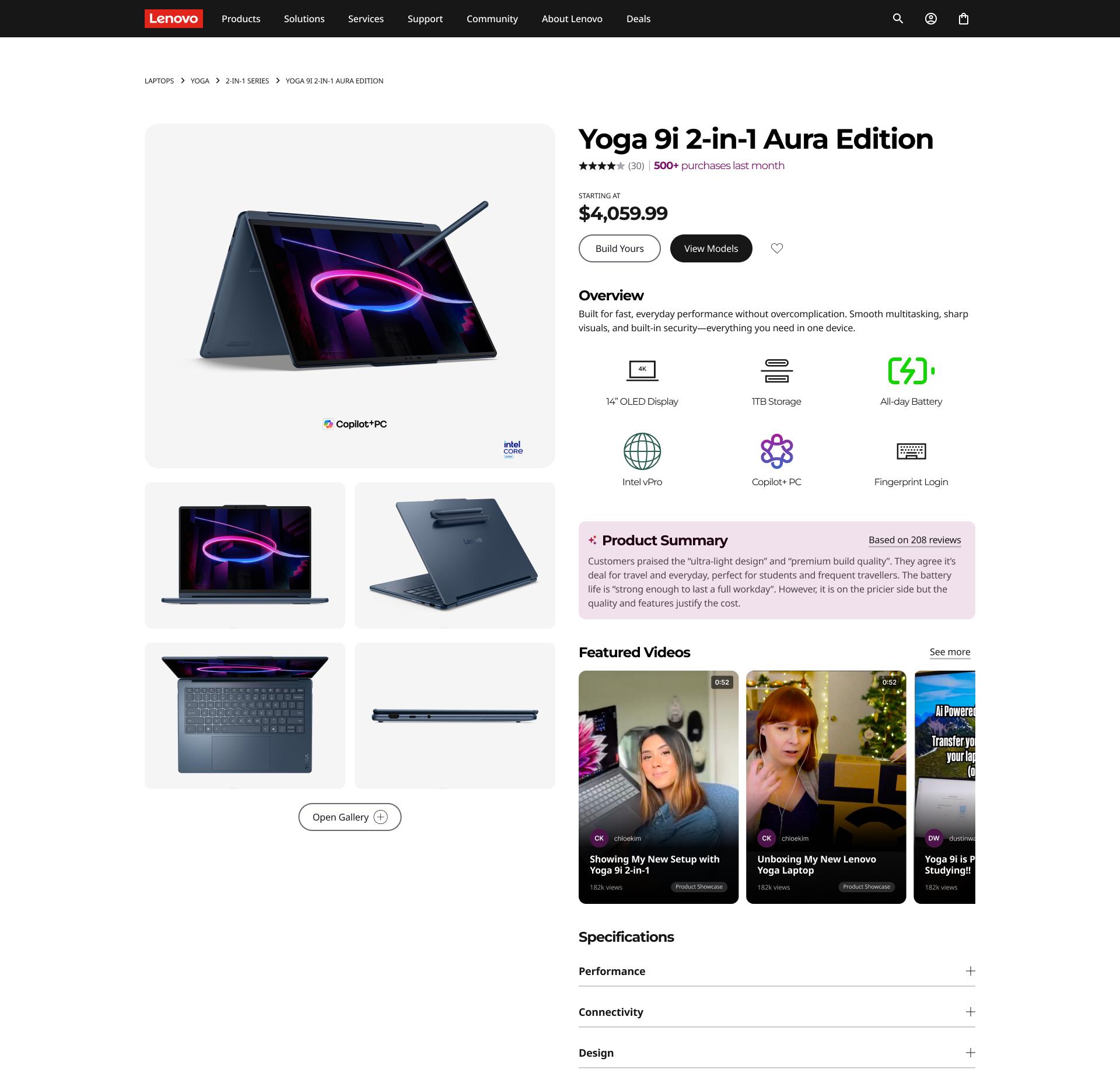
Product Detail Page
Product pages have no shortage of information. The challenge is knowing what deserves attention.
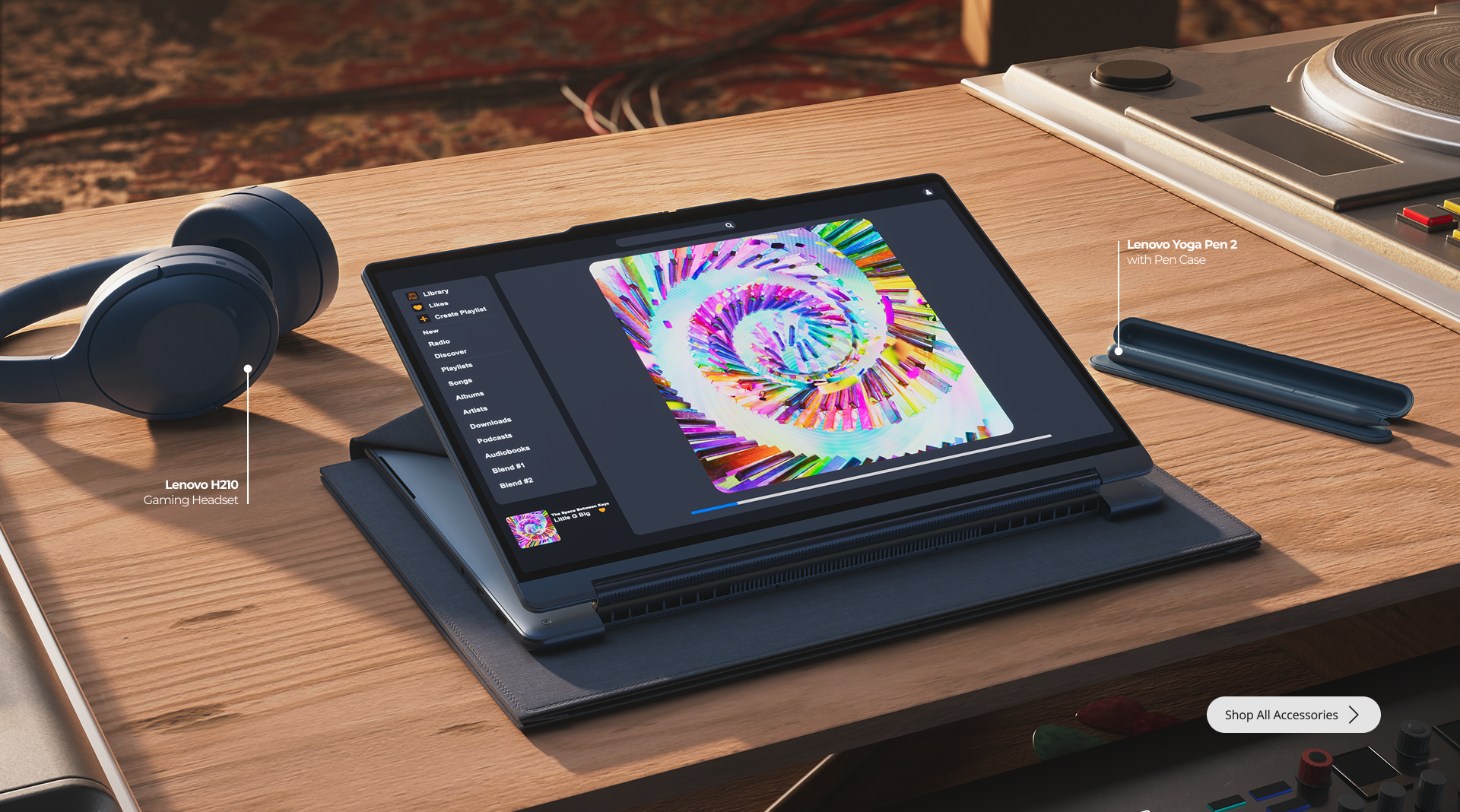
We streamlined the entire experience and restructured it around a clearer visual hierarchy, with bold, recognizable icons that distill key features. Creator-led videos and AI-summarized reviews bring authentic perspectives into a space traditionally dominated by specifications.
Instead of building a laptop from scratch, shoppers can start with recommended pre-configured setups, making the final steps just a little more effortless.

IMPACT
Lenovo came to us at the onset of a broader evolution of its digital experience, with an ambition to better connect with a new generation of consumers.
What began as an exploration of Gen Z shopping behaviors evolved into a research-backed design framework spanning four key touchpoints. Through iterative user testing, we refined our concepts into developer handoff-ready material, presenting our findings and recommendations to senior Lenovo executives.
The work was designed to extend beyond our collaboration in phases. Ideas from our work have already begun finding their way into key pages of the live experience in 2026, establishing a foundation for larger redesign efforts planned through 2027.
Year
2026
Lenovo Team
- Nicholas Hyde
- Stephanie Walker
Design Team
- Chloe Kim
- Reinesse Wong
- Sunny Liu
- Yuki Li
- Tiffany Quen