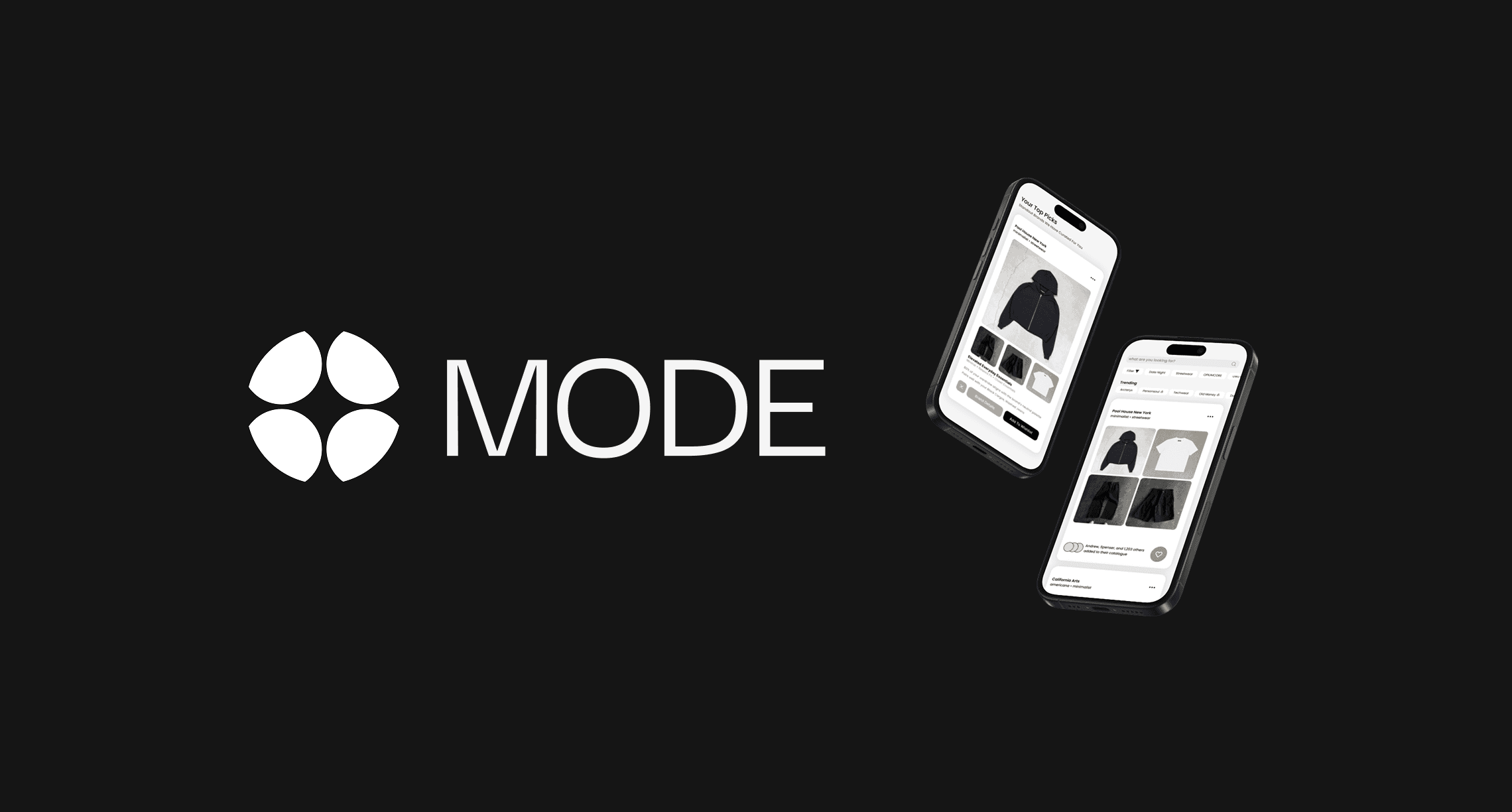
mode
a fashion discovery and advertising engine built on personal wardrobes.
MY ROLE
lead product designer
TEAM
2 designers
2 engineers
1 developer
TIMELINE
june 2025 - oct 2025
SCOPE
user research
interaction design
prototyping
ui/ux
design systems
branding + logo
TOOLS
figma
figjam
adobe creative suite
CONTEXT
what is mode?
MODE is a mobile application designed to provide users with the best in-class recommendation engine for brands and clothing items, by connecting personal wardrobe uploads with style analysis, serving both consumers and small businesses.
After joining the founding startup team of four as Lead Product Designer, our goal was to build a search and curation tool that reflects how people actually shop – making it easier to discover and explore brands beyond the mass market. I led user research, visual design, and end-to-end product design from low-fi’s to high fidelity prototypes, turning MODE’s early concept into a scalable digital product and brand that helped secure $25K in funding.
THE PROBLEM
online shoppers are overwhelmed by endless choices in a market dominated by mass trends and overconsumption
“[online shopping] is a part time job of comparing everything” -S.R
Many want to shop more intentionally, but algorithms surface the same fast-fashion items while smaller brands remain hidden, leading to endless, unsustainable consumption. I’ve experienced this myself — spending hours scrolling for something that I resonate with, only to end up exhausted. Hiring a personal stylist is expensive, and diy methods like Pinterest often feel time-consuming.
Having felt these frustrations ourselves, we set out on a goal to address this issue on the consumer side:
How might we make fashion discovery feel more personal, intentional, and effortless for users?
UNDERSTANDING THE USER
they need to curate, not consume
What do people actually value the most in online shopping? What are the biggest problems different demographics encounter as consumers?
After 34 user interviews across the team with college students, fashion designers, influencers, working adults, and CS outliers...
“So many saved links of clothes, no easy way to decide what to buy next” - s.w
“...[overconsumption] is definitely a problem with clutter and stuff” - c.g
“I’ve wasted so much money trying to find my aesthetic” - k.c
...i identified a few key insights:
Users enjoy convenience of online shopping but miss the confidence from trying clothes in person.
Decision fatigue - people feel like they spend too much time researching before buying something.
Many students struggle to style or forget what's in their closets, leading to clutter, overconsumption and spending.
We should target an 18-25 yr old audience, as they are the most trend-driven and affected user group.
ANOTHER PROBLEM?
however, while interviewing users, conversations with small fashion brand owners highlighted another side of the problem that we hadn’t thought of prior...
“When we ran Meta ads, out of 1000 people only 2 converted.”
“I had to shut down my brand after three months because we ran out of money”
...small fashion brands struggle to stay visible and profitable in a landscape dominated by costly ads, inefficient targeting, and mass-market competition
These findings opened up an additional side to our original problem:
How might we connect small to mid-market fashion brands with their ideal customers more efficiently and with fewer wasted impressions?
IDEATION
setting up a framework for the tools of our product
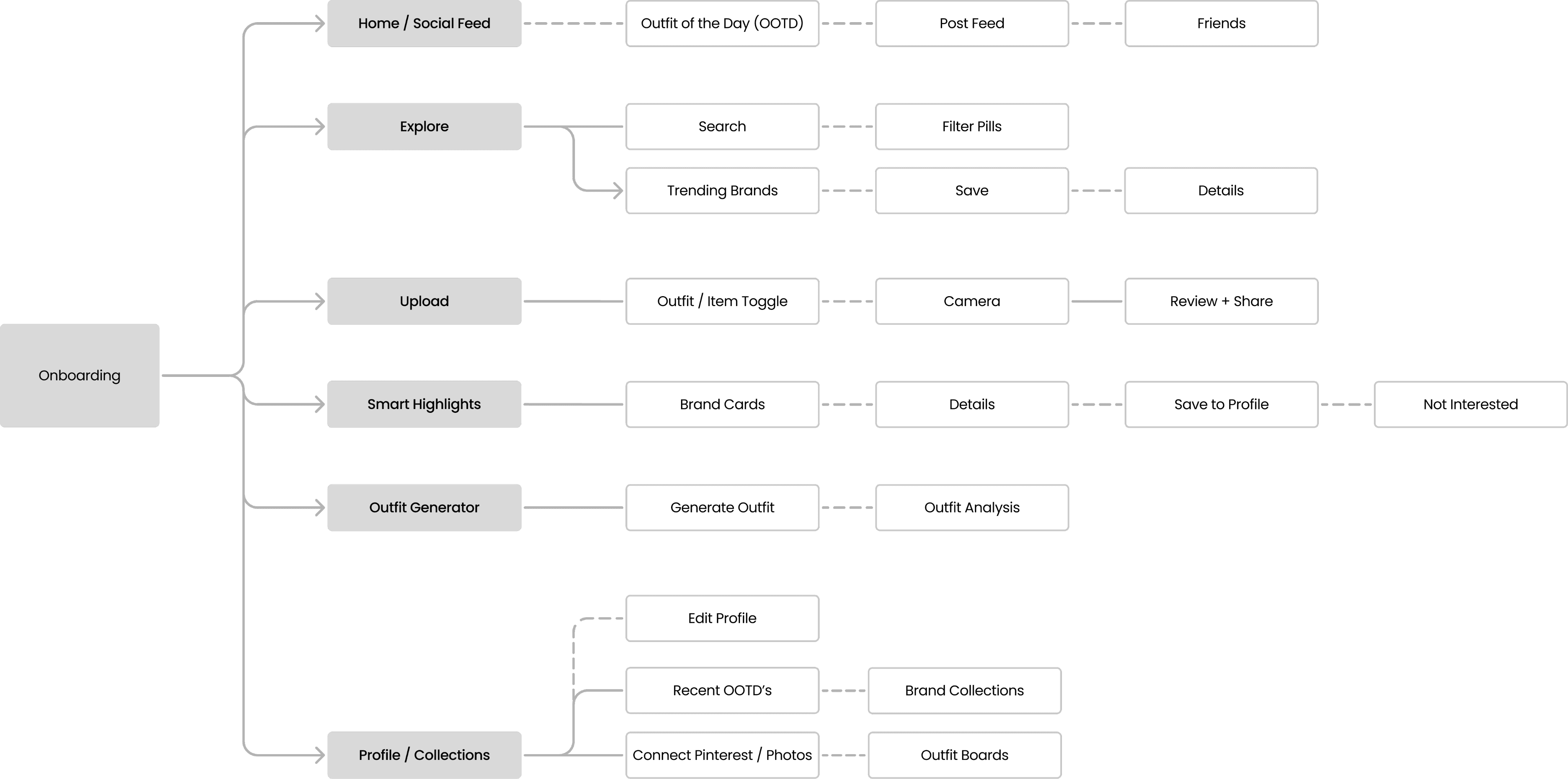
For the initial launch, prioritizing simplicity and interactivity is key to engage and retain new users, so i decided to push back the outfit generator and focus on wardrobe uploads, mode board creation, brand search and recommendations, and a social feed, because of their immediate impact and ease of use; we would scale up once we acquire an abundant number of users.
EXPLORATION
early explorations
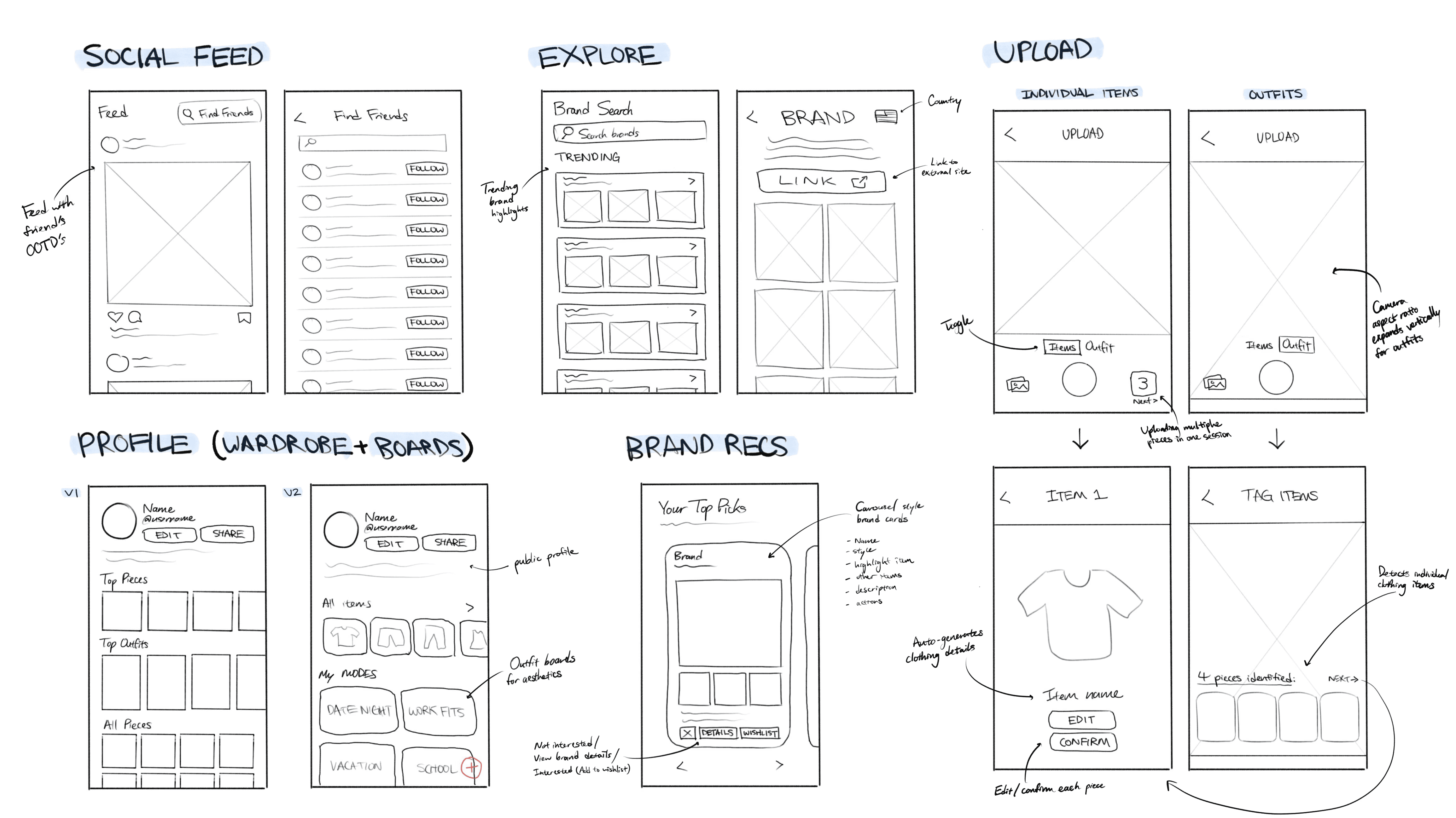
Collaborating with my co-designer, we ideated initial layouts and each produced low-fidelity sketches to quickly visualize core app features before refining their functionality and feasibility in mid-fidelities.
ITERATION
simplifying our framework
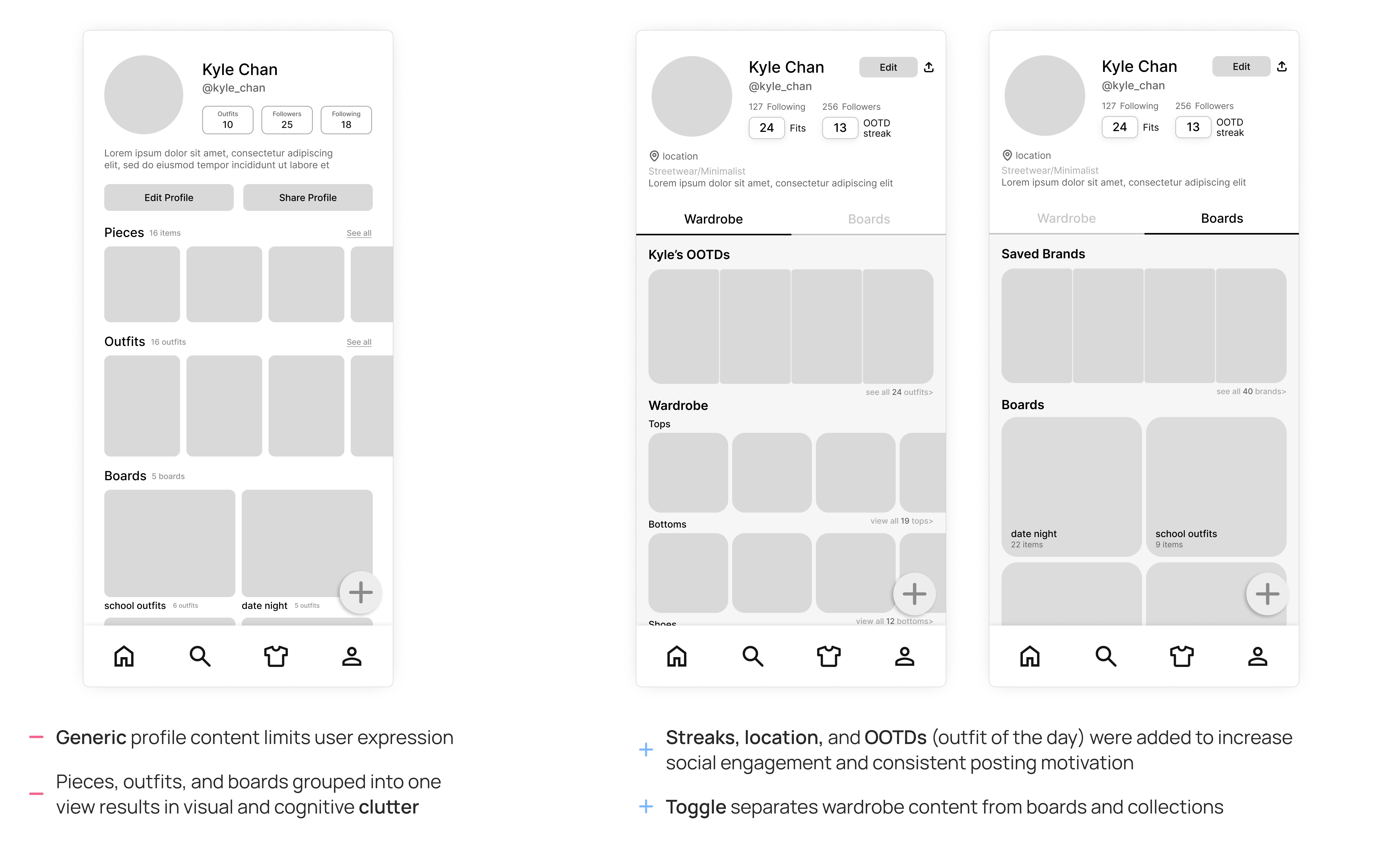
The Profile Page needed to integrate individual items, outfit posts, and boards, but early versions treated them too similarly. Refining this structure made it easier to navigate while making the profile more engaging for curation and inspiration
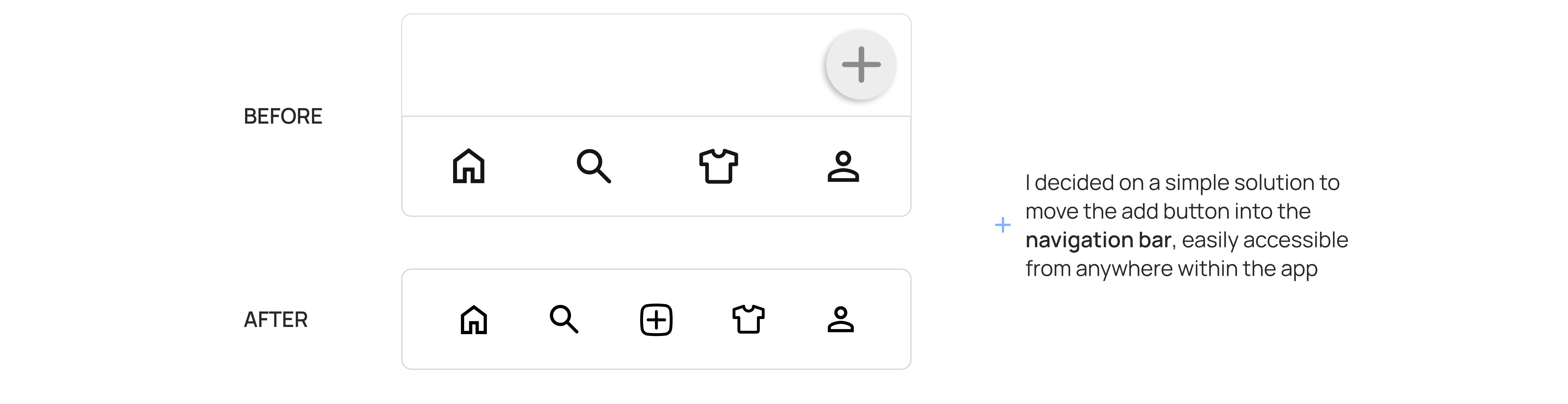
While the profile page included a floating add button for wardrobe uploads, we realized users encounter inspiration throughout the app — across the social feed and explore — making creation a cross-app behavior rather than a profile-only action.
When the user actually presses add, it originally revealed three options; item upload, outfit upload, and board creation. However, user interviews showed that most users already organize outfit inspiration through Pinterest boards.
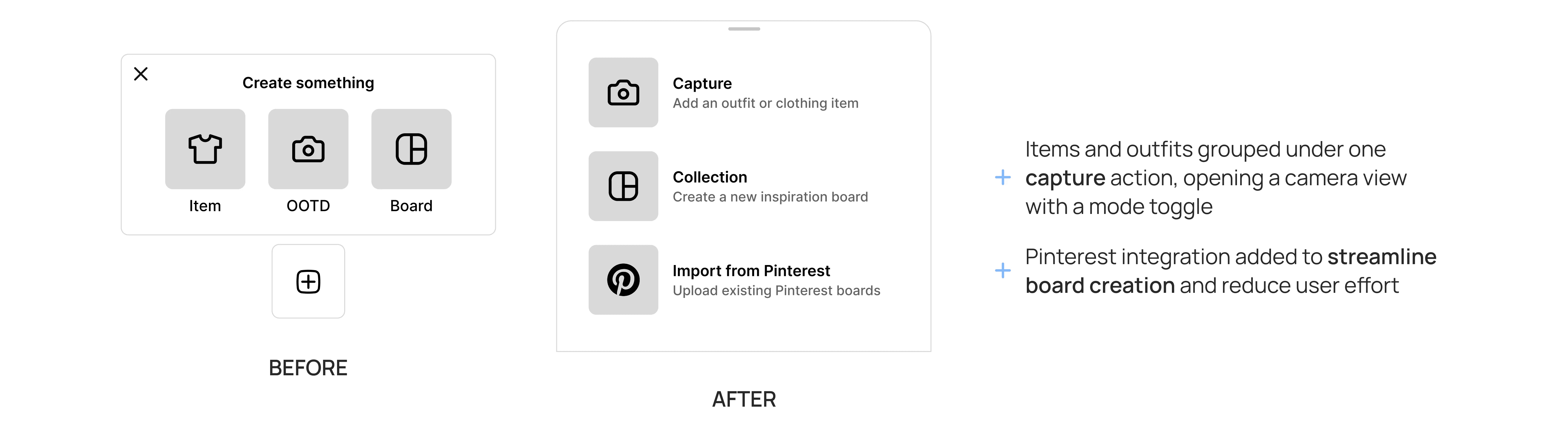
This led me to make a small adjustment to simplify creation while better supporting how users already collect inspiration.
fostering engagement
The social layer of the app drives interactivity and connection, so I focused iterations on improving the overall layout and save interaction, as well as adding a feature for user engagement to help keep the app active and sustainable.
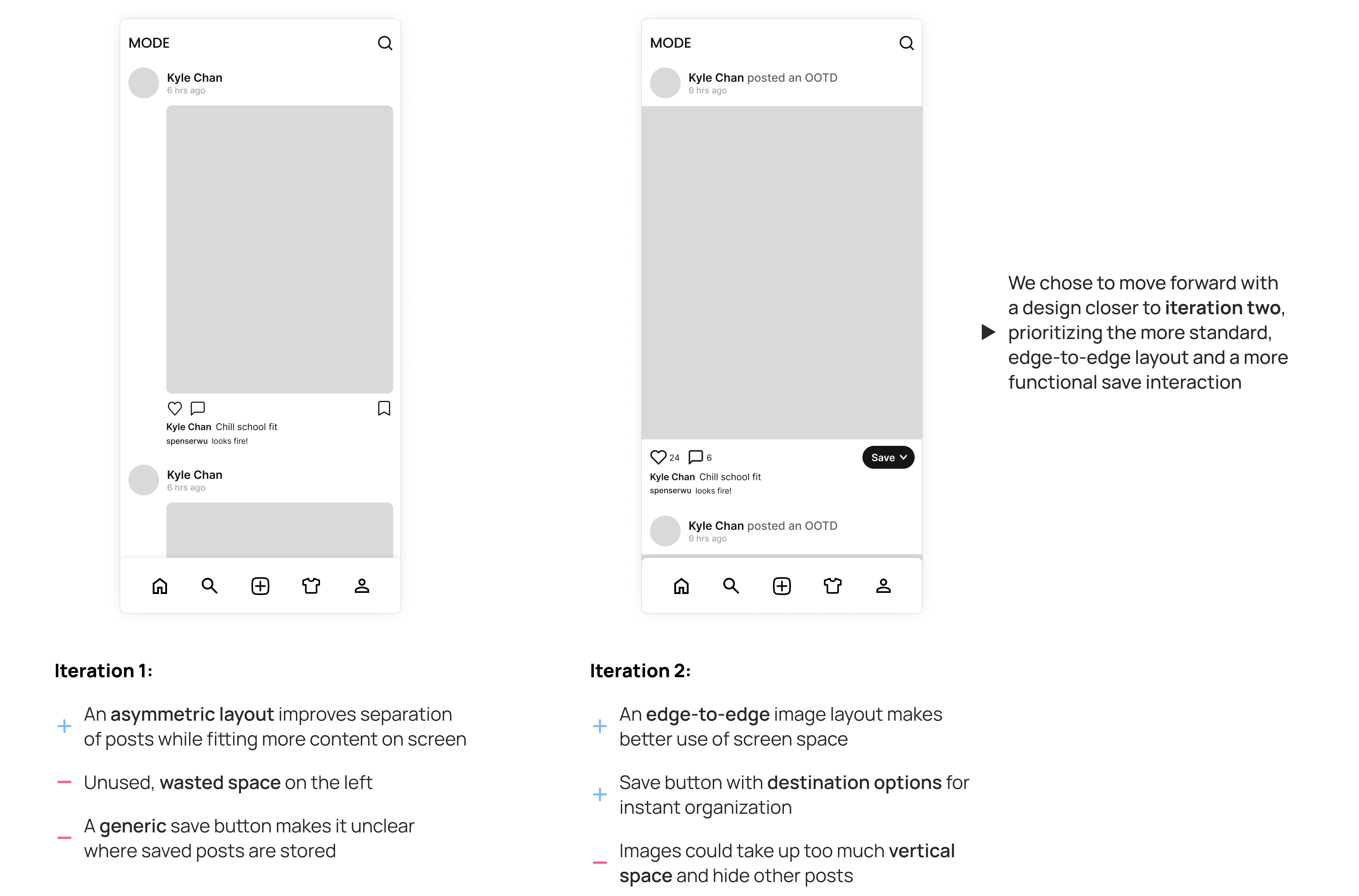
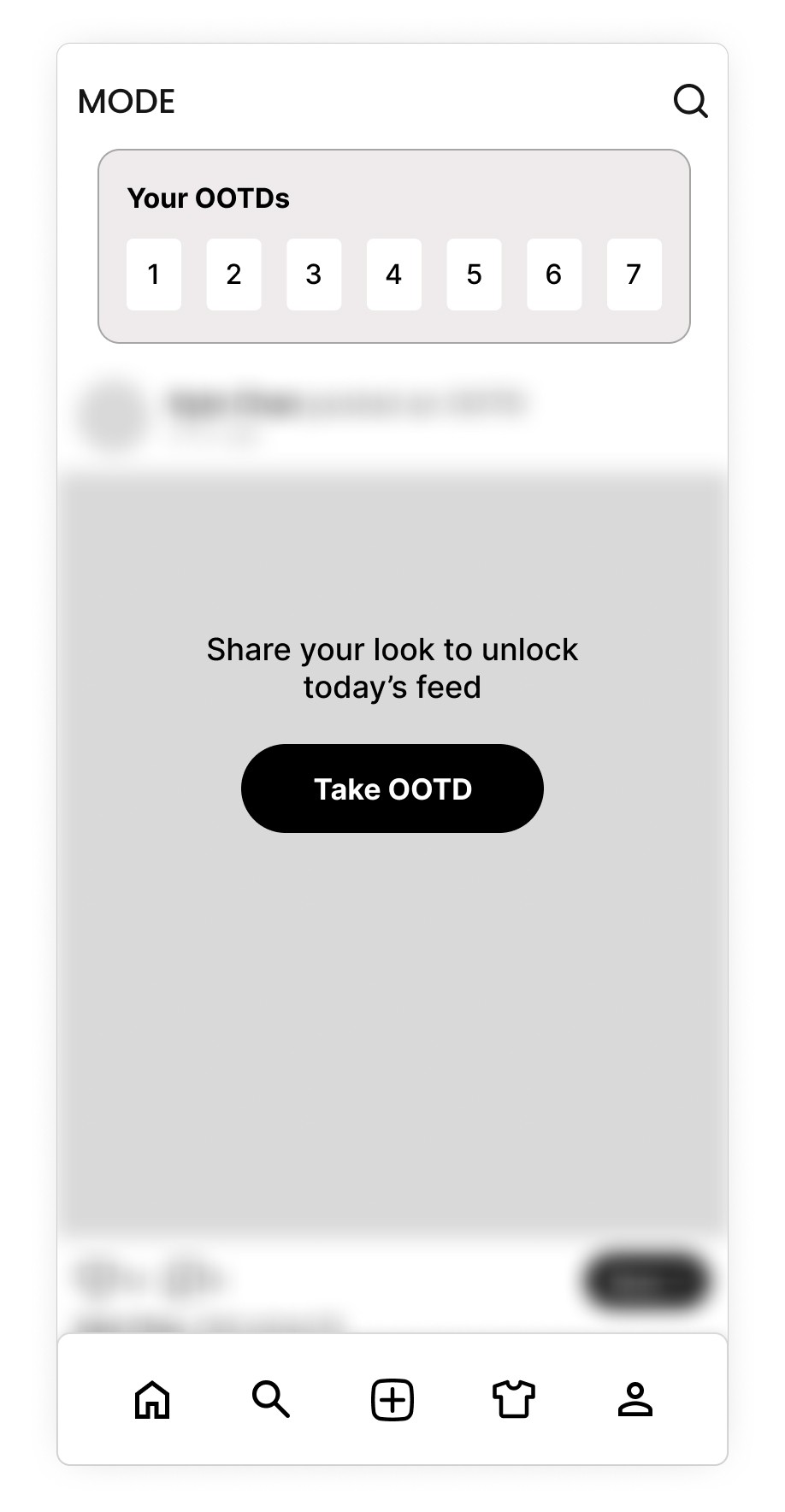
We introduced an additional layer of interactivity by requiring users to post their own Outfit of the Day (OOTD) before viewing others for the day.
This barrier motivates users to post, which also keeps the social feed active
Fashion discovery is a core aspect of the product, with MODE positioned as a platform for small brands to gain visibility and grow. The Explore Page serves as the foundation for this experience and we wanted it to feel tailored while still encouraging exploration.
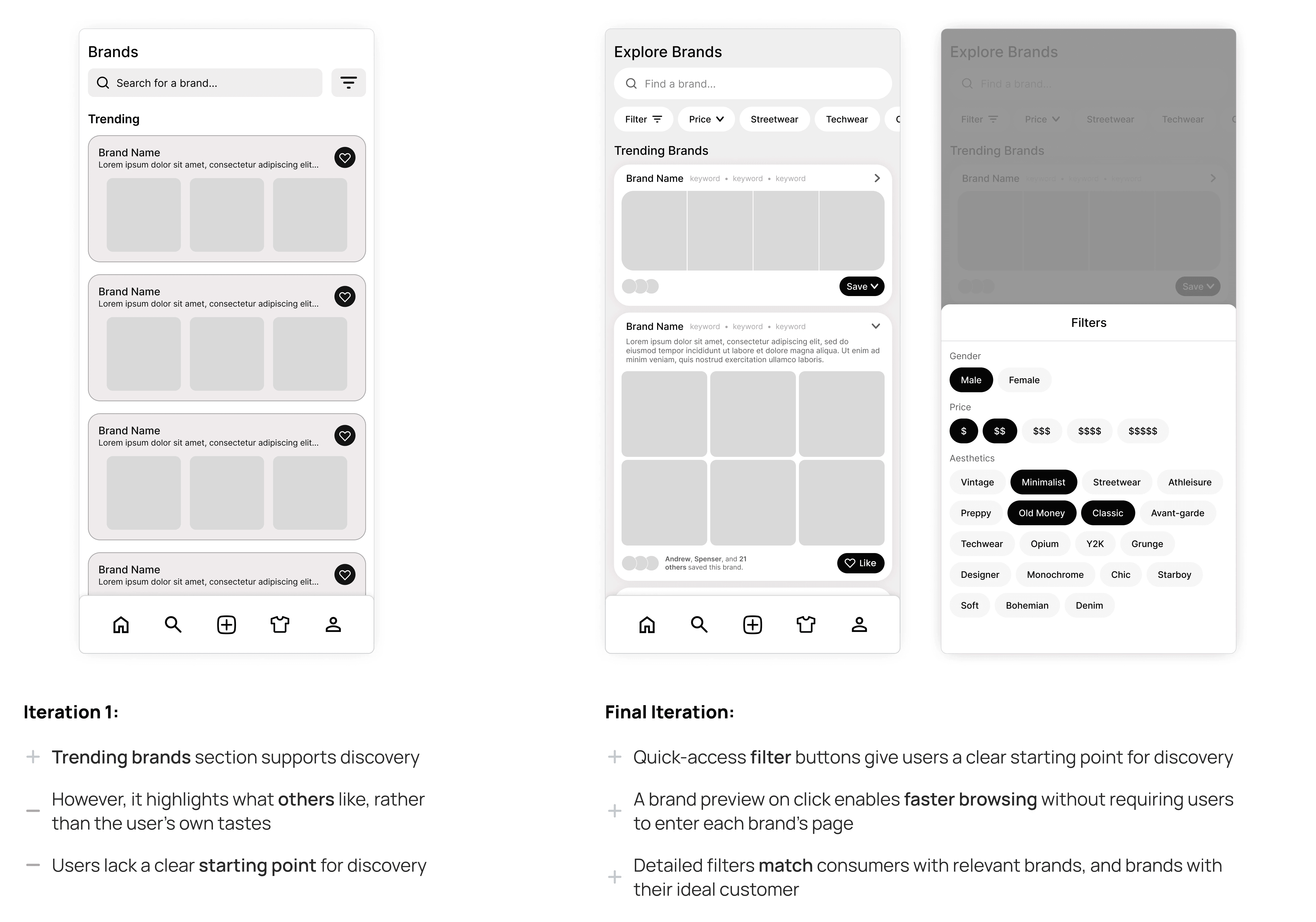
Early iterations were generic and lacked targeting, so a filter system and additional layout refinements were introduced to improve scannability and address the goal of guided discovery.
Rounds of iteration eventually brought us to mode's final designs…
FINAL DESIGNS
mode's tools
onboarding
social feed
explore
curator
creating a board
the first beta is expected to release by early 2026, and all features and components have been handed off to the developer on my team, including our…
REFLECTIONS
after it all…
designing a product from scratch is not easy! these are some reflections i had on my experience.
learning Figma by doing (a lot of doing)
MODE was one of my first full projects in Figma, and is where a hobby I did on my own time turned into real production-level design. Hours over the summer went into this project and I ended up learning everything from components and auto-layout, to how to high-five another cursor in Figjam.
product design isn't as straightforward as i thought
What initially felt like a clear problem space evolved as user interviews and conversations unfolded. Putting myself into the user’s shoes changed my priorities more than I expected, and while adjustments weren't always easy, it made the final result that much more meaningful.
working with developers, engineers, and founders
Being in a startup environment taught me to think beyond UI and consider feasibility, business goals, and how strong communication ripples across the entire product and team. Shoutout to my partner and co-founders for their mentorship and trust in me to help shape an idea into something real.
Overall, grateful for the opportunity and so cool to see an everyday problem materialize into a funded product nearing launch. This is just the beta, and I'm excited to help bring even bigger ideas to life — check out the newest version of MODE!